Search This Blog

Showing posts with label review. Show all posts

Monday, 2 April 2012

Dead Silence Review

It's just a bizarre coincidence, but for some reason I've found myself watching and reviewing a horror movie on the exact same night this year as I did last. It must just be some psychological thing that whilst everyone else is spending April 1st playing jokes on each other, I'm hiding in my garage watching movies which scare the absolute shit out of me. And Dead Silence certainly succeeded in this department.


I think this movie was written as a counter-argument to those who say the Saw movies are just "torture porn", and not real horror. I've got no proof of this, but I get the feeling from watching it that the producers finally had enough of hearing people say they couldn't make a proper horror movie, and decided to show them just how good of a horror film they could make.

You know a movie's scary when you've seen the banner image for my Blog but will still rather hide behind a pillow than look at the screen...


This movie is filled with horror cliches, the sort of stereotypical things that come to your mind when you think "horror movie" - creepy dummies which appear to look at people, disembodied voices, a freaky as fuck soundtrack. Hell, they even included a clown at one point. This movie is, in essence, a walking talking horror cliche. And yet, this makes it a perfect example of what the horror genre can achieve.

No.


The plot of the film is simple enough, our protagonist, Jamie Ashen, has his wife murdered brutally soon after a package containing a ventriloquist's dummy is delivered to their apartment, and as he returns to their home town to bury her, he starts to investigate the myth of Mary Shaw, a ghost whom the townspeople have a poem about: "Beware the stare of Mary Shaw. She had no children only dolls. And if you see her in your dreams, do not ever, ever scream.". Naturally, with the mysterious delivery of one of Shaw's dolls to his apartment right before his wife's murder, Ashen decides to investigate whether this ghost really was responsible for her killing, and also intends to unearth why.


He can also unearth why the Secretary of State is in a wheelchair whilst he's at it.


From a technical standpoint, this movie is incredible, but again from a cliched perspective. The colours are muted, or given a blue hue throughout, except for the few colours the director really wants you to pay attention to - the yellow taxi Ashen pulls up in, the red of his car, and the red motel sign shining through his window. A lot of the shock moments come from things being seen in mirrors, or in your peripheral, and the makers clearly had a lot of fun with lighting their "jump moments". The way the shots transitioned as well, moving out through someone's eye from one scene to another, or watching a map as it turned into the actual landscape and we see a car driving down the road, were great transitions, and of course, remarkably similar to the style they perfected in Saw, albeit at a much slower pace to fit the tone of the film better.


No, that's clearly "built". "tone" just implies low bodyfat.


Perhaps the most impressive technical aspect to this film has to be the use of background noise throughout the film. As we all know, Foley sounds are added to movies on top of the noise recorded by the microphones, because this is the only way to make things sound completely natural, and give a movie a realistic feel. To quote wikipedia, "Without these crucial background noises, movies feel unnaturally quiet and uncomfortable." - and this fact was clearly not overlooked by the makers of Dead Silence, who muted all foley sounds whenever a scare moment was approaching, to create a sense of unease, and make the audience dread what was coming next. Some may argue that this is just a cheap and pathetic trick, telling people when to be scared, in the same way as a sharp, stabbing, high pitched note on a jump moment would be considered to be. Though I felt that this worked perfectly in creating suspense, and would liken it more to the eerie background screeching of "The Shining" more than the "in your face" jump cues. Hell, in a sense, because it is the lack of noise which is designed to disturb, perhaps Dead Silence is more comparable to Irreversible than any classic horror film, as the soundtrack of that movie was designed to go largely unnoticed, yet was set at such a pitch and frequency so as to make people feel uncomfortable and even nauseous.


It's so hard to masturbate whislt you're throwin up as well...


So, now that I've explained where the title comes from, let's get on with discussing some of the other aspects of the film, shall we?


The acting is fairly decent throughout, for a horror movie. With an estimated budget of $20 million, this wasn't exactly a blokbuster they were making, and yet all the cast turn out decent performances, even the kids. There was not one moment in this film where I felt that someone was over/under acting, bringing me out the movie. Of course, Donnie Wahlberg's entire part was essentially over-acted, as he was the comic relief of the piece. However, he was a real treat to see on screen, and certainly made the entire film more enjoyable. This may be his worst performance as a character named Lipton, but he was still great, and the character was fantastic as well.


The make-up effects used in this film were terrifying as well, especially when combined with the shock lighting and general atmosphere. And hell, seeing a witchwoman with a dolls face is fucking terrifying no matter how you cut it!


READ THIS ALT TEXT AND YOU SHALL DIE IN 7 DAYS!!!
Ok, so it doesn't even need a doll's face to be terrifying.


The music for this film is also great, with the producers getting their old friend Charles Clouser back again, although this time writing a proper score, rather than ripping off the keyboard part from a Rammstein song.


Don't act like you can't hear the similarities....


Of course, this makes the soundtrack less memorable (hell, you really remember the silence more than anything else. Hence the title, I guess), but it does make it a little more fitting, just as how the soundtrack to The Thing was very understated (and nominated for a Razzie - because what the fuck do they know about decent scores?)


All in all then, this was a fantastic horror movie, and a real frightfest - you can tell it was good because after I had watched it and was walking to my computer, my dog let out a heavy sigh and I nearly jumped out of my skin in terror. Then again, I couldn't play Manhunt with the lights out, so I'm evidently easier to scare than most. Still, it was great to see the Saw guys make a "proper" horror film, and do such a damn fine job of it. Of course [spoiler], they still kept the obligatory twist ending that they have at the end of all their films, but I was rather impressed with this one, because it was so far removed from what I was expecting, I imagine I got the same feeling watching this as the people who watched Saw before everyone started talking about it and giving away the plot must have gotten from that [/spoiler]


So, looking for another horror film for 2nd April? The Thing was certainly my top recommendation last year, and this year that recommendation goes to Dead Silence. Watch this movie.


Voice

Tuesday, 17 January 2012

"Street Kings 2: Motor City" Review


"Street Kings" is an interesting movie because it appears to be the only occasion on record in which Terry Crews has worn Sleeves for the whole time he was in a film:


"Yo Ludlow - What is this shit covering my arms, man? I gotta let these guns BREATHE, son."


It is also a clever police thriller, with a lot of twists, and some really decent action. It makes you think, and also contains some really well written characters: some of them just cool, and some with whom you can really empathize. Street Kings was the first movie I saw Chris Evans in and thought he was half decent (so well behind the curve of that one: should have watched "Sunshine" when it came out, really, since the Ads ruined it on TV anyway), and despite the ending being a slight let-down, the story up to that point is solid, with every new twist being as exciting as the last, and the audience never knowing what is going to happen next. It had its moments of retardation: the scene in which Reeves and Evans kit themselves up with shotguns, which then disappear completely in the next scene so they only have handguns when they get into a firefight is just ridiculous. But all in all, it was a very entertaining movie.


Not to mention the poster is fantastic for trolling. I mean, come on, there's a guy in it named "Common".


Not only this, but Street Kings finally allowed me to crack "The Keanu Code". You see, a lot of people complain that Keanu Reeves can't act: he's very wooden, has a monotone voice, and doesn't seem to be very expressive. However, after watching Street Kings, I finally realized why this is. It's not because he is a bad actor: it's because he is typecast in the kind of movies where the character would have these traits. Think about it: In "Street Kings" he is an overly-paranoid alcoholic cop. In "Constantine" he is a depressed addict who has actually seen hell. In "The Matrix" he is an anti-social hacker who works a job he hates and probably has autism, who becomes unsure of whether or not he is living in the real world. And in "The Devil's Advocate", he plays a Southerner. In every one of these films, it makes sense that the character wouldn't show any real feelings, and Street Kings therefore proved to me that Keanu Reeves can, in fact, act: just only in very specific roles.


Perhaps.


Street Kings was also nice in that it appeared to have been made by a fellow "House" addict. When Hugh Laurie (who plays the captain of the IA team investigating Forrest Whittaker's outfit) is introduced, he is in a hospital, and spends the entire scene sitting in a chair - you know, because of his limp. And whilst Liotta's character being shot in the leg and developing a limp in "Street Kings 2" may have been an homage to this (if you squint) - it just didn't have the same epic feel as the original.


Or the obvious sexual tension. Speaking of which, aren't they remaking Top Gun?


The main problem Street Kings 2 has is that it shares its name with "Street Kings". Unfortunately, this inevitably leads to you comparing it to the original movie the whole time you are watching it, even though it was almost certainly written as a completely  independant movie, and simply had the "Street Kings" name tagged on the front of its actual title, "Motor City" in order to sell more copies. And whilst this will result in people like me buying it because they enjoyed the first Street Kings, it also is gonna result in a lot of disappointment, because quite predicatbly, it does not live up to the hype which the title creates.


"Street Kings 2: Motor City" starts just terribly, with a necessary but badly shot and badly set-up scene at the start in which we see Liotta getting shot in the leg, then proceeds to get even worse. We see Liotta teaching a group of schoolchildren about police work whilst dressed in a dog suit, and it feels as though we are already straying into "Big Mommas House 2" territory only 3 minutes into the film. As Liotta meets his new partner, the stereotypical young go-getter cop who makes fun of the old ways, we start to worry about just how cliched and dull this movie is going to be, and when the murders and suspicion around which the rest of the movie revolves begin to unfold, the audience is left bored to tears - literally nothing interesting happens in the first half hour or so of this film.


Things get a little more interesting, however, when during the murder of the third cop involved in the deep cover narcotics team we open on, is murdered. The reason things become more interesting is that we see his killer: Ray Liotta. Now, this may have been fairly predictable, and I had a hunch that Liotta was going to turn out to be the killer in the end. However, revealing him as the killer so early on in the film changes the dynamic of things, and the movie is then allowed to unfold in a far more interesting fashion than if it had focussed entirely on the solving of the case, with the killer's identity being the big ending "twist". From this point on, the movie certainly becomes more interesting, as we learn more and more about Liotta's plot to get rid of the cops he thought were going to rat him out to Internal Affairs, and take revenge on the dealer who got away at the start by framing him for these murders. However, this story arc too is ultimately fairly cliched and predictable, and whilst far more enjoyable than the first quarter of the movie, still does not manage to save it.


Don't get me wrong - this film has some absolutley golden moments in, which were well worthy of the "Street Kings" branding. The discussion between Liotta and Sullivan (our hero for most of the movie) in front of the captain when the two are first paired together has one of the most inspired pieces of dialogue to come out of a straight-to-DVD release in a long time:


Kingston: I worked homicide for one year and in that time I put away more criminals than you have in your whole life!

Sullivan: I've only been on the force 9 months.

Kingston: Exactly.


And the scene on the train in which the criminal who Liotta has framed for the murders is cornered, and then taped by a passenger, is incredibly well done, and was very enjoyable. And yet, this movie is lacklustre at best in the end, and didn't seem to reward the viewer with much. Whilst "Street Kings" had a plot which unfolded like an intricate web, with twists and turns being thrown in constantly, and the audience always being left in suspence right up until the finale, "Motor City" has just the one twist, and not an overly complex plot to help back it up. And whilst it is decent for a movie obviously shot on hand cameras with a very low budget, it really shouldn't have aligned itself to a much better made movie, because the comparisons just kill it.


Just like Terry Crews, amirite?


There were other things that bothered me about "Motor City" besides the plot and Cinematography as well. The acting is fairly hit-and-miss at the best of times, and Armand Benoit, who plays Sullivan (Liotta's new partner, and the main hero of the piece) doesn't seem to be able to get into character properly - he is very clearly trying to act, rather than trying to portray a person. The head cock he does with his one liner in the closing scene is probably the worst example of this, but there are other moments throughout the film where he does this as well. Of course, he has his moments too: such as when he is in the hospital waiting room after his wife is blown up by a car bomb - but for the most parts he really doesn't seem convincing. Plus, it's fairly distracting that he looks just like a fat Shia LaBeouff.


According to Wikipedia, he played Nicholas Cage's partner in "The Bad Lieutenant", which is odd, because I'm fairly certain Val Kilmer was Cage's partner in that film - unless he has multiple partners in that film, though I must admit, I don't recall Benoit being in it. Hell, if you had just told me that Benoit was in "Bad Lieutenant" and asked me to guess who he played, I probably would have thought he was the guy who was drowning in his cell near the start, and who we see working in a hotel at the end, not Cage's partner. You know, that or I would have said he was the wrestler who killed his family and then hanged himself from his weights rack.


the awkward moment when you realize a guy nicknamed "The Crippler" might have anger issues...


The ending, as well, just seemed really poor to me. Not only was the car exploding ridiculous and over-the-top (which I can live with, since I loved "The Long Good Friday", and that contains the most retarded vehicle explosion in motion picture history: a stock car blowing up when it crashes into another. You know, a car from that sport in which the vehicles are designed to crash into one another), and the fact that Sullivan somehow got out without us seeing was just as bad, but the ultimate climax of the film where he and Liotta face off was just disappointing as well. It was supposed to be a powerful emotional scene, clearly. And yet, it still didn't feel like a big deal. Not only that, but having just seen "10 to Midnight", I have a fairly good idea in my brain of what a scene involving a cop shooting an unarmed suspect who is trying to talk him out of it in full view of a bunch of other officers should look like, and the ending to "Motor City" didn't come close to that ending.


"You want to use the ending from one of my films? No dice..."


All in all, a poor effort, and a real step-down for Liotta. I don't mind him starring in no-budget films - "Cop Land" was great - but this movie just didn't do it for me. And whilst it was bearable enough for me to sit through the entire thing, and not just turn it straight off and watch "Neds" instead (which I also picked up today, but decided to save on the assumption it will be the better of the two films), it had nothing on "Street Kings", or any other half-decent cop movies for that matter. It is relatively fun, with the occassional interesting or dramatic moment, but overall is a giant let-down. Hell, even the pimp-tastic car wasn't as cool as Denzel's in Training Day...


Rating:


**


2 stars


Not an awful movie, but I wouldn't exactly recommend it either. It has its moments, but just not enough of them to keep you entertained throughout. There is a nice reversal in the style of storytelling part way through, and some of the scenes unfold nicely, but that's about all I can say for it. It is a fairly clever movie in some ways, but doesn't live up to many of its competitors in the same genre. Maybe pick this one up if you see it in a bargain bin or something, but don't spend £5 on it like I did (I got "Hard Boiled" and "The Killer" for less than that combined!). Definitely stick with the original Street Kings if you're going to watch one of them.


Voice

Friday, 30 December 2011

The Killing Machine Review


Right from the second this DVD started running in my player, I had a good feeling about it. The opening song has the exact pace I was looking for in this movie - and the film managed to match that pace and then some.


I had previously seen only 2 of Lundgren's movies as a director: Missionary Man, and The Mechanik - both of which end with epic shotgun-induced headsplosions.


Would you believe this is the less epic of the two?


Whilst Missionary Man is a fairly slow-paced film, a modern update of the classic western - a mysterious figure turning up in a town rife with conflict to help out the citizens, The Mechanik is an action-packed thriller which opens like the second half of Taken and closes like the second half of Missionary Man. Both of these films were awesome, and Lundgren has certainly proved that he can not only act and kick some serious arse, but can direct a half decent movie as well.


The Killing Machine, however, takes things to a whole new level. Right from the off, we get some incredible and brutal action, with Dolph taking down 4 guys in the opening sequence, before we flash back to the beginning of the actual story. I used a comparison with Taken above for The Mechanik, and I'm afraid I'm going to have to use it as a comparison again here - but not for the plot, rather for the violence. Oh, and the DVD covers, since they look identical:


Note: 'Icarus' is the title of the Director's cut - Dolph Lundgren's verison of the film. I watched the producer's cut - called 'The Killing Machine', so will be reviewing that.


One of the things I loved about Taken was, aside from in the driving scenes, the gun violence is incredibly realistic. The prime example for this being when Neeson shoots the henchman through the glass window in a door, and he just drops like a rock, with some bloodsplatter. The shot lasts all of a second, and is one of the most realistic looking headshots ever to appear on film. Whilst most films will either dwell on graphic wounds, like Saving Private Ryan, or will shoot them in a stylized manner, maybe with slow motion, or some kind of artistic imagery, such as Tommy DeVito's death in Goodfellas (see A History of Violence for a combination of both of these), Taken took things in the opposite direction, and made the violence graphic, but extremely quick - taking place in real time, with realistic wounds. The Killing Machine takes this a step further - keeping Taken's ultra-realistic gunshot and bone breaking wounds, but adding to it to make the violence as graphic as possible without appearing to be trying to dwell on it. Think *SPOILER ALERT* Leonard DiCaprio's death in The Departed - it's over in a split second, with him dropping realistically and not much time spent dwelling on the wound, and yet we get a very graphic blood-splatter on the wall behind him from the exit wound. The Killing Machine takes this kind of action - and applies it to nearly every death throughout the film - possibly creating the most realistic action movie of all time regarding violence.

A lot of the shots show the weapon going off in the same frame as the wound being inflicted - which always heightens the realism.


The visual effects outside of the shootings are incredible as well, especially regarding the wounds inflicted during the two torture scenes in the movie:


Let's put a Smile on that face!


Seriously, whoever did the effects on this had better wind up in Hollywood soon - because the wounds in this film are far more graphic than those in a lot of movies with 20 times the budget. The way the wounds leak in the few shots where we do pan back to someone who has been injured is also incredible, looking incredibly realistic, and slightly unnerving. In fact, this is the most impressive set of effects I've seen in a low budget movie since I watched The Thing earlier in the year.


Whilst the plot of The Killing Machine is nothing new - an ex-KGB agent who tried to leave his life behind winds up as a hitman for the mob, who then come after him after he botches a job in Hong Kong - it is fast paced and suspenseful. And despite the fact that you know exactly what is going to happen at every turn, is still incredibly thrilling to watch. Lundgren's use of different types of camera and shutterspeeds to reflect the mood of each scene is astounding for a man with so little experience in directing, and the voiceovers by the character fit in perfectly, sounding like a non-pretentious version of Max Payne.


Why don't you go shoot someone with your M4 you fucking conformist.


In all honesty, this is all you could ask for in an action movie, it doesn't make you think too hard - it doesn't try and be overly innovative, and yet it is just clever enough to be gripping, and has so much action I swear it must have broken some kind of record for a single-man bodycount. Wait, scratch that - I just remembered Punisher: War Zone...


No-one touches my KTD, N00B!


In fact, that's probably the best comparison I can make - the character has a similar background to that of Viggo Mortenson in A History of Violence (but switching origins with Mortenson's in Eastern Promises) - a man who wants to get away from his past life, and settle down with his family, but is unable to because not obeying his former bosses puts his family at risk, and so goes on a killing spree that even The Punisher would be proud of. Of course, that does make sense, all things considered:


Honestly, this is actually the movie I felt The Expendables should have been. The effects in that were too obviously added in post, and I think trying to give that many characters interesting parts was just too difficult for them to handle. By scaling back to having just one unstoppable machine 80s action star, and giving him a real motive for his violence, Dolph Lundgren has managed to create a perfect genre piece revenge movie, for about the 4th time in his career. In fact, I think Dolph Lundgren has actually become the master of the action-revenge movie (let us not forget that Deathwish isn't in fact a revenge movie, since Bronson never kills those actually responsible for his wife's death), and this is possibly the pinnacle of the genre. Of course, there isn't much originality here (Dolph Lundgren as an ex-KGB agent AGAIN?), but it's an action movie, so why worry? And the fact that only two of the deaths are ridiculous enough that they could have been in a Steven Seagal film shows some restraint on Dolph's part to not play into the stereotype of low budget action films.


 Pictured: The only completely unrealistic death in the entire movie. Fairly impressive for a film made by an old 80s star for $5 million. Take THAT Van Damme!


On the subject of which - it's also nice to finally see a film which was shot in Canada admitting to this, and not trying to play itself off as being set in America as so many do. You know all those films set in Washington D.C. which are filmed in Toronto? Can't think of one? How about ANY film set in D.C. where you see a skyscraper? Since there are no skyscrapers in D.C. Oh, plus half the films set in New York...


Oh look, a 50-odd storey building in Die Hard 4 - well, that can't possibly have been shot in Canada, can it?


You know, in LA confidential, the cameras were placed deliberately so that any building taller than city hall would not be seen, because at the time the movie was set, that was the tallest building in LA. But when you come to movies set in D.C...


So mad props to Dolph for that - why play to the American audience. Canada has awesome stuff too...

Fuck yeah.


In fact, the only real problem I had with the film (as well as the ridiculous death scene pictured above) was how open it was left at the end. It just didn't feel right, leaving the film at the point we did. If it had ended a scene earlier, things would have been perfect. If we had seen what happened next, it might have been better, but the ending felt pretty lackluster after the rest of the film. Oh, also, the codename for Dolph's character Icarus was a bit distracting, since I'd just watched Sunshine...


So, to sum up - awesome pace, well shot, compelling if a little cliched story, bitching soundtrack, incredible effects, and that guy from Inglorious Batards. What more could you want?


Given Fred Williamson would make a ridiculous KGB agent-turned Russian mobster...


Another cool thing about this film is that Dolph mixes up his fighting style so that rather than just the straight karate and shooting we're used to, he throws in some proper MMA-style shit as well, throwing and grappling dudes to mix things up with his punches. He looks great too, which is a relief, given some of the pictures of him which have been floating around recently:


Though, to be fair, he did play a heroin addict right after this, so maybe he was just trying to get into character?


This is Dolph at his finest, and it's unbelievable that he wasn't a fan of this cut of the movie. Now I really want to see the director's cut to find out what he did differently!


Rating:


****


4 Stars


Brilliant action film, incredibly well shot, and with some half decent emotional scenes as well (unlike Steven Seagal's sex scene in 'A Dangerous Man'. Talk about awkward...). The plot is fairly predictable, but unravels nicely, and is on a par with other similar films such as A History of Violence. The pace of the action is incredible, and you wonder how they manage to keep it up for an entire movie without guys getting shot to pieces becoming boring. This film is nothing ground breaking, but has got to be the best action movie to come out since Punisher: War Zone. Plus, silenced Desert Eagles - What more could you want?


Das Vidanja!


Voice


(I speak no Russian whatsoever, so I'm hoping my basic grasp of Serbian (do viđenja) is enough to have spelt that correctly...)

Monday, 9 May 2011

A Serbian Film Review


There has been quite a bit of controversy over Srdjan Spasojevic's debut movie, Srpski Film (a.k.a "A Serbian Film"), with people lining up on either side of that age-old wall: One side say it's sick and should be banned, whilst the other side say it's art, and has value, or at least that the creators should be free to show their vision to the world without being censored by governments.

I suppose both sides have a point, really - I remember hearing about Antichrist soon after watching Ted Bundy's final interview and thinking "wow, this is exactly the sort of film Bundy was talking about when describing what turned him into a serial killer - maybe it should be banned". But, at the same time, I only got the see the uncut version of "The Matrix" for the very first time a couple of weeks ago, because despite the fact I watched it on video when it first came out, and then on DVD after everyone upgraded, the uncut version has never been released in the UK on any format - all because it includes a few extra headbutts, which the Government don't want people seeing, for fear they'll decide it is a perfectly acceptable fighting technique (I notice Fellowship of the Ring still got a 'PG' rating despite containing a headbutt, though...).

So, both sides have a point. In the case of A Serbian Film, the pro-censorship lobby are screaming about how depraved and twisted the film is, and ranting about how it should be banned for the good of the world, and how the sickos who watch it should all be imprisoned; whilt the anti-censorship lobby are shouting about how great works of art should not be stifled, and that we don't need a nanny state to protect us, because only we ourselves know what affects us and what doesn't. However, in the course of this heated debate, with both sides attempting to shout the other down, and prove their moral superiority, both sides seem to have missed the real issue here...


The Film really isn't all that good.


Now, I'm sure you might say that I'm the one missing the point, because the argument about censorship shouldn't be restricted to only "good" films, and should cover even the lowest of the low - but seriously, I felt like I was watching a different film to the one everyone has been talking about. Admittedly I did watch the BBFC 18 release of the film, and not the uncut version, but having been online and looked up exactly what was cut out of the runtime, I feel I can safely say that I know enough to make an informed opinion on this movie, and it is neither art that should not be censored by the fascists in Government, but nor is it a sick and repulsive gore-fest that will cause people to become serial killers. It is nothing more than your standard post-saw shock horror, with a bunch of cocks thrown in to piss off conservatives.


Now, I'm not going to sit here and say the film didn't have any redeeming features, but nor am I going to play up its supposed message to make it into something it isn't. This movie isn't a masterpiece exploring what it's really like for Serbians, growing up in a country with no real identity, no real sense of individuality, and being oppressed by those higher-up every day of your lives. Nor is it a critique of Serbia's Government censorship of years passed, a Government which censored even the tamest of vampire stories for fear of what it would do to the public consciousness, yet happily broadcast the heads of its own populace being placed on spikes by Mudjehadeen soldiers fighting in the Yugoslav conflict of the 90s, in order to stir up public anger and hate of Muslims. This film reflects none of these things. How can I be so sure that I didn't just miss the point of the entire story? Because this movie plays exactly the fucking same way as a SAW movie, that's why.

Think I'm kidding? Not only does the film have layers of time confusion, skipping ahead of events, then coming back to scenes of gore when the aftermath is stumbled upon later (as with every SAW film), but it also has the same basic plotline as SAWs 3, 4 & 6, with an individual being forced to harm others against his will, just in the hopes he can survive, and it all finally culminates in a big twist reveal.

Now, I know what you're thinking - you're thinking I just twisted events in my head and over-simplified things to make it just seem like "SAW 4 - BUT WITH PORN", but the truth is the connection between this film and SAW is just as strong as that shared by 'Avatar' and 'Pochohontas' (or 'The Last Samurai', or 'Dances with Wolves', or any one of a thousand other stories...) - it's not definitely based on the other movie, but God is it reminiscent of it.

Hell, even the way the violent scenes are shot is strangely reminiscent of the SAW films, cutting between images on monitors, and jumping into the events, then coming back out again. There aren't the same jump cuts employed by the producers of SAW, but if there were I would swear I had simply accidentally bought a Serbian version of SAW 7 (but with more cocks).

The level of violence, too, is almost exactly on a par with the SAW films - in fact, most of it is even less graphic, despite what pro-censorship fanatics are screaming in the papers and on internet message boards. The fact is, aside from the sex, things are fairly tame by most modern horror standards, and the only real concern is that mixing sex and gore makes a different, more dangerous beast entirely. There are maybe 3 murders throughout the course of the whole film which involve anything sexual - every other killing could appear just as easily in the next Bourne film and no-one would bat an eye (except they might be wondering why Bourne was naked whilst shooting the enemy's henchmen). And of those sexual killings, one was almost entirely cut by the BBFC, so does not have any impact on the viewer whatsoever (that would be the killing I mentioned in my discussion on 'The King's Speech'), and one is so comedic I actually have to go into it in more detail in the next paragraph, so just bear with me. In fact, the only real brutal sexual killing which occurs is in a scene where, doped up to the eyeballs on speed, viagra and bull testosterone, our protagonist Milos rapes a woman who is chained to a bed, before hacking off her head with a machete which is handed to him by one of the snuff film's camera men. Violent? Yes - and yet, were you to show him rape her, then decapitate her in a seperate scene, there wouldn't be so much outrage, so why is there so much anger when the two are put together? Not only this, but the story has already start to become so unbelievable at this point that it just washes over you, and you feel no horror at all. In fact, the only moment which really made me wince was when we saw a quick flash in Milos's memory when it appears he cut across his penis with a knife, and we then see him piss blood into the toilet bowl - but it is later revealed that this did not actually happen, and he merely held the knife to his penis, threatening the director he would cut it off if they did not shut the movie down. Even the notorious "Baby rape scene", whilst a horrifically disgusting concept which creates some revolting images in one's mind upon even hearing the suggestion, is poorly shot, with effects so poor you find yourself thinking "shit, they should have got the guy from The Thing in to do this shit (though, that's hardly an insult. If you said "man, they should have gotten the guy who did the CGI on Two Face in The Dark Knight to come and do this" then it would be truly insulting, but you get my drift, right?) - yes, it's a horrible thing to put in a movie, but it's so poorly done your only real reaction is "why put this in the film at all?"

In fact, there were two seperate points in the film where I actually laughed at the absurdity of events, because although the movie claims to be a dark and painful look at what it feels like to have all power taken away from you, it is pretty dumb in some places. The first of these is when Milos is watching the camera footage back, and sees one of the guards rape him whilst he was unconscious. Whilst this scene is supposed to show Milos's complete loss of power, and humiliation, it is just plain funny, because Srdjan Todorovic does not appear to react at all to the footage, which means the tone of the scene has to be inferred from the tone of the video itself, which is shot in a highly comedic manner. In fact, Todorovic is so wooden throughout most of this performance, I'm certain they simply threw a chair in the room in a couple of scenes. No, I kid, but seriously, I'm about 99% certain he was only hired for the film because he has an enormous penis, since they make such a point of showing it off every 5 seconds.

That's another interesting thing about this film. A lot of the porn films designed for Broadcast or regular store release don't show erect penises, and you generally have to move into the murky recesses of the internet to find anything involving boners and cumshots, and yet somehow a film passing itself off as a serious movie which is in no way supposed to be a porno shows the main character's erect penis almost constantly. Now, don't get me wrong, I didn't get any sexual enjoyment out of watching this whatsoever, so from that perspective, one can argue it is not designed to be porn. However, I would argue that it's just because I'm not a sick fuck (despite what certain articles on this Blog may indicate), and that for some people this film probably is sexually arousing, and the gratuitous boner shots help reassure them that it's ok to jerk off to it (because jerking of to Gore without porn would just be weird, right?). If it does indeed turn out that Mr Nice was only rated 18 because we see David Thewlis's limp dong in it, then this film should by all rights be incinerated, because it certainly goes beyond the call of duty on the penis front - hell, I think Peter North would be proud of this film. Ok, enough dongs now, this is starting to sound weird, like I've got some kind of dong fetish and just can't get them off my mind, so I'll just mention one more thing about cocks, and then we're through. Done. Finished. Finito. Massive Dong. Fuck.


Anyway, the second scene that really made me laugh at the absurdity of it all was the scene near the end where Milos straight-up murders a dude by shoving his dong in the guy's eye-socket. Yeah, this is clearly high-class art with an important message behind it...


Now, I'm not saying that the movie was all bad - the direction seems fairly competent throughout, and the early scenes of the film, coupled with the anticipation of what you know will happen makes the beginning genuinely heart-wrenching. It's just too bad they couldn't keep the pace up throughout the film.

You'll notice I said "what you know will happen" - I don't mean that as in "because you've read all about it online already", I mean it as in "because it's so fucking predictable". There's supposed to be this big reveal at the end where Milo finds out what the movie's all about, and finds out who the masked man that killed his friend is - and it's so predictable I swear it could have been the ending to an episode of Lie to Me. But with more dongs. Shit.


I once said about the SAW films that the reason they were watchable was not the gore, which only a few freaks really watch them for, but for the evolution of the story, and the anticipation of what the twist at the end which ties everything together will be. Hell, you could say the same thing about Nolan's films (if you're functionally retarded, which since you're taking advice on movies from me, I suspect you probably are) - but this was just sooooo predictable that you didn't even have to think about it for a second. And it's not that all my years of watching Inspector Morse and Lewis have made me into a 1337 Television Detective who can work out any ending from minimal clues - it is just plain boring and predictable.


The very, very end twist, too, I found annoying - not because it was predictable, but because it didn't make any sense. It seems to imply that the whole thing was a set-up, and that Milos was destined, from the beginning, to (SPOILER) kill the director then murder his own family and kill himself to escape the horror. To which I have to respond "so... the bad guy was taking masterplanning instructions from the Joker, was he?" - what a retarded plan that would have been if it really was all meant to have been set up. I just can't even go into the levels of stupidity, I'm sorry. I'm too tired to even explain how that was worse than the endings of Memento and The Prestige combined (a lot of Nolan hate tonight for some reason, and I don't really know why, he hasn't done anything to upset me lately, he's just good for making comparisons...)


Hell, I would say the only truly redeeming feature this movie has is the incredible score, which is unbelievably fitting throughout the film, and really helps to raise the tension and horror. The direction is fine, the cinematography is great, and the acting is fairly reasonable for the most part - however, a poor script, which seems almost entirely based around a "need to shock", and a very poor ending means this film is disappointing. It's probably worth a watch, just to make up your own mind on all the fuss, and it's not truly attrocious - I don't feel like I wasted hours of my life on it, or even that I wasted the £5.99 I spent on it, but I do feel that it really fails to live up to all the hype surrounding it, and figure you'd probably have a better night if you just watched SAW instead.


Rating


**


2 Stars


Not awful, but nothing special. Don't believe the hype, as the N.W.A would say (or was that the DOC?). To be honest, I wish I could give this film a great review, seing as it features quotes from websites on the DVD box to try and sell itself, but to be honest, I just can't. Tune in later, and hopefully I'll find some films I can give the dreaded 1 star rating soon!


Voice


Just as a side-note, whoever did the translations on this film was fucking atrocious - like the bit where Vukmir's talking about Milos locking some woman in an oven and making her blow him, or something? Was that something which was meant to have happened, which is why Vukmir was so interested in Milos, or was it some kind of metaphor or parable or some shit, or what? I have no idea - and a couple of times the subtitles were confusing as hell, appearing at the wrong points in conversations, etc.

Saturday, 2 April 2011

"The Thing" Review


How is it possible that this film did not win the Academy Award for Best Visual Effects? I have seldom, if ever, seen effects quite as realistic, as horrifying, as were present in “The Thing”, and to think that the majority of these were created by a 22 year old, working on a movie with an overall budget of $15 million, is simply mind-blowing.


Like you didn't know it was coming...


Reviews from the time of the film’s release seem to suggest that they may have even been too good; they are described as being grotesque, and gratuitous, and a number of reviewers seem to feel that the focus on gore detracts from the movie as a whole, killing the suspense. I, however, respectfully disagree.


The Thing is a movie about Isolation and Paranoia – about not knowing who you can trust, but being stuck in the company of those who may kill you at any second, because you have no way of escaping. It is possibly the most intense psychological horror movie to grace our screens since Stanley Kubrick’s adaptation of The Shining (although, since that movie was only released 2 years prior to “The Thing”, this may not sound like such an impressive achievement as it actually is). Few horror movies, if any, can even be mentioned in the same sentence as The Shining without paling in comparison, and yet somehow this movie, made on an even lower budget than Kubrick’s famously small $22 million for The Shining, seems to me at least to hold up under the same levels of scrutiny. It is, quite simply, one of the best horror movies I have ever seen.


Yep, even better than this...


However, it is common knowledge that “The Shining” was also critically panned upon its initial release, with Stephen King practically disowning it, and the movie finding itself nominated for Golden Raspberry (Razzie) awards not only for Worst Actress for Shelley Duvall, but (unbelievably) Worst Director for Kubrick as well. Indeed, it seem the early 80s were a bizarre time to be a film maker, with both The Shining and Blade Runner, two movies now regarded as being among the greatest ever made, being universally panned, and even Rocky IV finding itself nominated for 9 Razzie awards, despite being 90% pure awesome, and only 10% shitty robot/little kid scenes (I think this, in and of itself, proves that John J.B. Wilson needs to hurry up and fucking die already so we can all be rid of his worthless opinions on movies (INB4 “look who’s talking”)). So, I suppose I really shouldn’t be surprised that The Thing was nominated for a Razzie Award as well – but for the score? You’ve got to be fucking kidding me!


I'm running out of these...


Ennio Morricone has proved himself time and again, from the original spaghetti western trilogy (on the subject of which – how are there people who think that “The Good, The Bad and The Ugly” is set after “A Fistful of Dollars”? It is clearly a prequel, and, assuming you don’t count “The Godfather, Part II” due to it’s only being part-prequel, part-sequel; is the greatest prequel ever made), onto “Once Upon a Time in the West”, right through to “The Untouchables” and “Bugsy”, and “The Thing” is no exception to his consistently high standards.


What is this? Lame Pun Day?


In fact, the score is extremely reminiscent of that of “Escape from New York”, John Carpenter and Kurt Russell’s previous outing, which Carpenter scored himself. The score is made up of very low beats, mostly bass notes, set at a relatively slow tempo, which really enhances the sense of foreboding at the start of the film, and provides a subtle, yet dramatic soundtrack to the film. Much like in “Escape from New York”, the score seems specifically designed to raise the tension in the suspense-ridden plot of the film, whilst also maintaining excitement. It is one of those rare scores which would hardly be noticeable if it didn’t almost fit in too well; and in fact only drew my attention because it was so reminiscent of Escape from New York.


Remember this one?


Looking back at the effects as well, they are so incredibly well done that it almost seems to bring you out of the movie, as you stop and say “wow, that looks incredible!” – and this is perhaps why many of the critics from the time of the film’s release didn’t see the same brilliance in it that I do. I’m watching this movie from an age where CGI and visual effects are everywhere – so imagine seeing effects that blow my mind today, way back in 1982. You would actually be consciously bringing yourself out of the movie, forcing yourself to think “It’s only a movie, it’s only a movie”. And there, my friends, lies the sheer brilliance in The Thing. Even if you can’t suspend your disbelief long enough to just sit back and enjoy it, it has real artistic value.


Depending on how loose your definition of "Art" is, I guess...


At the opening of the film, I was worried we were going to see the aliens crash land, and then the team would dig them up in an “Alien vs. Predator” manner. Hell, the opening shot of the film is identical to the opening of Predator (made 4 years laters), so it was a really present surprise when the film opened apparently halfway through the attack of the Aliens, as the team of Norwegian scientists who thawed it out are mostly lying dead, and the American Scientists who the rest of the movie focuses on are still unaware of what horrors await them. This decision to introduce us to the story part way along is inspired, because not only does it help you identify far more with the characters if we are all thrown into this mess partway through, but it also means we avoid the need for various tedious explanations. Upon seeing the charred remains of one of the Aliens at the Norwegian camp, Kurt Russell’s character MacReady instantly realizes that the only way to kill the creatures is with fire, and orders them to be burnt from the beginning. This allows the story to progress rapidly without the tedium of having to show the characters discovering that fire works against the “things”.


Till Lindemann agrees that fire works against pretty well everything...


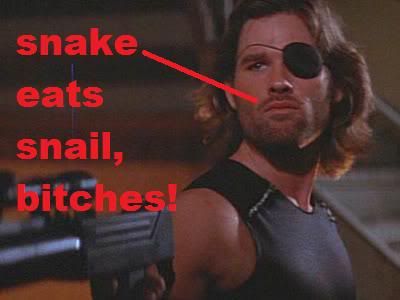
MacReady himself is one excellently written character, and Kurt Russell portrays him superbly. Starting off as merely a bored everyman, MacReady quickly progresses into badass action hero, then apparently regresses back into a paranoid, nervous wreck, before finally taking control of the situation again. The character is multi-dimensional, which is nice to see, and somehow combines the cool of Snake Plissken with an everyman feel which makes him easy to identify with, yet still see as a badass. They just don’t make them like that anymore…


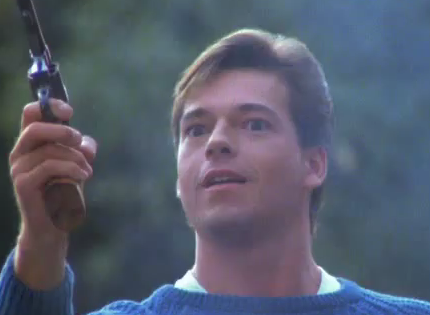
This is actually a picture of Patrick Swayze. Sorry to Mindfuck you...


The rest of the characters, too, are a lot better written than those in most contemporary horror movies. In the same manner in which Predator created a team of Commandos who were all memorable in their own ways, some more so than others, but all with real personalities, “The Thing” manages to do the same thing 4 years earlier with its Antarctic research crew. Of course some of the characters are not explored too thoroughly, and not every last one of them is given a detailed personality or background, but given the pace of the film, it is hard to imagine any way that this could be reasonably achieved without affecting how the plot unravels.


The sets are incredible, with the cuts between location shoots in British Columbia in the winter, and studio scenes in the Californian Summer being unnoticeable, thanks to clever camerawork and direction, and the brilliant idea to supercool the sound stages to a mere 40F so the actors would appear just as cold in the interior scenes as they did outdoors. John Carpenter once again outdoes himself bringing his movie to life with the smallest of details, much in the same way as he and his set designers transformed just a couple of blocks of East St. Louis into the apparent sprawling Urban environment of a dystopian Manhattan in Escape From New York (shot on an incredible $6 million, incidentally). It is impossible to fault the sets or locations in this movie, and that is one of the advantages of setting a film in such a small, confined area. Even though 95% of the movie takes place within a single compound, the overall feel of the film is grander than many which take place across entire cities.


In the end, it is hard to fault this film. It is very disappointing that it didn’t win the Oscar for Best Visual Effects; E.T. won in 1982, with Blade Runner and Poltergeist being the other 2 nominees, whilst Return of the Jedi won in ’83 – with no competition whatsoever. Of these films, only Blade Runner really seems to deserve the award over The Thing, and even then, only because it created such a grand scale futuristic metropolis (Incidentally, I have only seen the Director’s Cut, which I hear is far superior to the original version – hence the critical panning and missing out on the Oscar?) – The Thing still has the more realistic, and ultimately more impressive, visuals. The only reassurance that I take from the effects side of filming is that Rob Bottin, the incredible designer of many of the alien creatures, went on to work on such great films as Se7en and Fight Club, so it seems his talents weren’t entirely wasted after this.


My only real concern now is the rumours of either a remake, or a prequel to, The Thing being made later this year. I hated the idea of an Escape from New York remake when I first heard about it, and I hate the idea of The Thing being remade, even with John Carpenter at the helm. There’s an old saying which goes “If it ain’t broke, don’t fix it” – and with an average rating of 8.2 on IMDB, landing it in rank 177 on their Top 250 list, it doesn’t look like there’s too much wrong with The Thing in anyone else’s eyes, either.


You know, except for the obvious...


RATING:


*****


5/5 STARS


Probably the best horror movie I have ever seen, and certainly the best Alien movie (that's right, even better than Aliens! *GASP!*) - If you haven't already seen this, place it right under Full Metal Jacket in your stack of films to fucking watch! Peace Out!


Voice

Monday, 10 January 2011

Inglourious Basterds Review (Text)


Now, I’m fairly sure that absolutely everyone else who was ever going to see Inglourious Basterds has already seen it, therefore making a review slightly pointless. However, that’s never stopped me before, so I’m just going to write my thoughts on this movie, and see whether or not anyone agrees with me. Enjoy.

The first thing I would like to discuss is the title of this piece. The title of the movie was, of course, taken from the 70s film “Inglorious Bastards” (a.k.a “G.I. Bro” for all you Blaxploitation fans out there), and changed the second “a” in “Bastards” to an “e” for reasons unknown (and added an extra “u” to Inglorious, if my spelling ability isn’t completely fucked.


This is not a photoshop. This is genuinely the alternate poster and title for the original Inglorious Bastards.


This however, does not concern me. What I really want to know is why take the title from Inglorious bastards in the first place, even without the whole a/e thing? After all, Inglourious Basterds is clearly not a direct remake of Bastards, so why use the name? My guess would be that it was simply because QT thought the name sounded cool, and figured that since there isn’t a black soldier in the film he couldn’t get away with calling it “G.I. Bro”, so went for “Inglourious basterds” instead. However, despite the fact that the two stories are completely different for the most part, there is one similarity which none of the reviews I have read managed to pick up on (then again, I suspect I’m one of the only people in the world to have seen the original Inglorious Bastards before seeing QT’s version).

In the original film, the Bastards are a group of deserters heading for Switzerland who come across what appears to be a German platoon on their way to the Alpine border. The Bastards engage the enemy, and kill all of them, before discovering that they were an undercover American unit sent in to apprehend the German’s V-2 prototype by infiltrating the train it was set to be transported on. The Bastards feel it is their duty to fill in for he Americans they killed, but only have one German speaker in the group. Not only this, but one of their men is also Black, and a French resistance fighter points out that he won’t be able to go undercover as a German soldier. This one element of the story is closely mirrored in “Basterds”, when the three German speakers from the group are all killed, and Diane Kruger’s character points out to Brad Pitt that they will never be able to infiltrate the German film festival (this will sound odd if you haven’t seen the movie, but basically, there is a film festival all the Nazis are going to in Paris, and the basterds want to get in and blow them up) if none of them can speak or even look German. This is literally the only part of the original movie to appear in Tarantino’s movie, which seems odd given they share the same title. But, I guess if you wanted to watch Inglorious bastards, you may as well pick up the original, so I can see why QT didn’t just copy it.


Because, let's face it, this is gonna be hard to top...


Regarding Tarantino’s movie, however, the new plot is interesting enough. As mentioned above, it focuses on a plot by the Inglourious Basterds, a group of Jewish-American guerrilla fighters led by Brad Pitt, who intend to assassinate the Nazi leadership when they attend a film screening in Paris. The movie splits its time between the Basterds, and the characters of Shosanna Dreyfus, the French owner of the Paris cinema the Nazi screening is due to take place in, whose Jewish family was murdered by an SS Colonel at the start of the film, and Fredrick Zoller, a young German war hero who is desperate to woo Dreyfus, unaware of her past or heritage. Dropping in on both storylines, we also have Colonel Hans Lander, the SS officer who murdered Dreyfus’s family at the beginning of the film, who adds menace as the “Jew Hunter” tasked with bringing in the Basterds.


This guy... is un-fucking... believable.


Essentially, the entire film is made up of just a couple of scenes, put together to form the story. We change location 10 times at the very most over the course of the movie, and each of the five “chapters” is essentially made up of one small “set-up” scene, followed by a long “action” scene. Of course, this is very familiar Tarantino turf, being exactly the same as the structure he used in Reservoir Dogs, True Romance and Pulp Fiction, all of which were essentially just collections of cool scenes put together to make a film. But in Basterds this is even more exaggerated, to the extent that you feel the film really has been told in only 6 scenes. This is a really cool way of telling a story, because it allows a lot of tension to build in each scene, as there is no pressure to cut away to something else going on in a different location, so Tarantino is free to have 20 minutes build up to a pay off, and can really make the best use of his incredible dialogue-writing skills.


Never forget...


Although Tarantino himself lists the very first scene in the film as the best scene he has ever written, I would have to disagree with that statement. The scene in the basement of the Inn where the German speaking-members of the Basterds go undercover to meet their contact is one of the best scenes I have ever seen committed to film, and shows that Tarantino really does still have the magic that made Pulp and Dogs such memorable movies. In fact, I would say that this scene probably surpasses the infamous “Sicilian Scene” from True Romance as being the best scene Tarantino has ever written or shot, as it is just perfect. And the fact that he can keep that level of quality up for the half hour or so the scene runs for just shows the man’s pure mastery of cinema.

That said, however, there were a couple of directorial choices that I didn’t like in the film. The first of these was the title we got when first introduced to the character of Sergeant Stiglitz, and the cheesy voiceover we got when his past adventures were shown. It just felt way too cheesy for the film, and really didn’t fit the tone of the rest of the movie. It’s a though Tarantino still hasn’t got all his Grindhouse fanboy love out of his system, which is a real shame, given how good this movie is for the most part, and how realistic he keeps most of it. I suspect that he just couldn’t think of a good way to introduce Stiglitz’s backstory within the film without killing the pace or making it seem gratuitous so just figured “fuck it, if this thing’s gonna stick out, I’m gonna make sure it’s right in everyone’s face!”. The second cutaway scene like this with the explanation of why 35mm film was so flammable isn’t quite so annoying, probably because we had already had one cutaway explanatory scene by that point, but still killed the tone and pace a little, just as Stiglitz’s backstory did. However, I’m fairly sure Samuel L. Jackson did the voice over, so it was kind of cool just sitting there going Yep, that’s Sam Jackson all right.” (I just checked IMDB to make sure, and was surprised to see that the OSS officer we hear speaking to Brad Pitt near the end of the film was Harvey Keitel. How about that?).


No caption required. Oh wait...


I also felt that a couple of scenes of violence were a little gratuitous. Now, I don’t really mind violence – I mean, come on, I just admitted that one of my favourite film scenes is one which involves (Wait, sorry – SPOILER ALERT – probably best apply that from here on out, really) two guys getting their balls shot off, and a whole room full of people machinegunning each other – but a couple of bits just felt unnecessary. For example, the second time we see Brad Pitt carve a swastika into someone’s head, I felt like we didn’t really need to see it in such detail, because it worked well the first time when we didn’t actually see anything (just like the “ear scene” in Reservoir Dogs). I also didn’t like the scene when Eli Roth shoots a recently killed character in the face about 20 times as he lies on the floor. I mean, I can understand what its showing – it’s showing his hatred and anger at the guy for killing so many Jews, but I’m not entirely sure we needed to see a shot of his face as it was blown apart. We could have seen the first impact, then cut to Eli firing until his mag ran out. That way we would have understood what was happening, and understood what the character was feeling, but not been subjected to such unnecessary gore. I know that war is actually horrible and unpleasant to look at, but at the same time, that wasn’t really the point the movie was making (given how overly stylized and “cool” most of the violence is), so the shot just felt a bit over-the-top, as though it was only in there to spark controversy.


NOT that kind of controversy...


Other than that, though, I really didn’t have any problems with this film. I’ve heard people complain about how most of the film is in French and German, but while I did miss the end of a couple of subtitles, this really didn’t bother me for the most part. In fact, I quite liked the effect it gave, because I don’t see how some of the scenes could have been resolved were the entire film shot in English, as the language is pivotal to the plot in places (e.g. the Jews in the barn not speaking English, or the Germans in the bar).

What did really surprise me about this film, though, was the way that it doesn’t stick to factual events, but instead writes its own version of the war. Whilst this seems strange, setting a movie in history and ignoring historical facts (it almost seems disrespectful to the people who were actually there), this effect does keep the tension up, because it means that literally anything can happen. One of the reasons prequels tend to be worse than the original films (except for “The Good, The Bad and The Ugly” and the prequel sections of “The Godfather part 2”) is because you already know exactly what will happen, so there is no real tension. With an altered history line, however, Tarantino is able to keep the tension going, as we are left unsure of whether or not the Basterds really will be able to kill the Nazi leadership and end the war. Plus, I suppose every historical story twists events to better suit the cinema anyway, so if they’re changing things in supposedly “true” stories, what harm does it do to make an entirely fictitious piece of work and set it in an actual historical event?


So, I loved the technical side of things, and the story and direction of the film, but what about the actors?

To be honest, I felt Brad Pitt was bad in this film. I felt he was a little too concerned with his accent, and not really that bothered by anything else. In the scenes where he is supposed to be playing an Italian, he is acting like he is Joe Black, and even in the other scenes, he seems as though he is just trying to play the whole thing for laughs. “Hey guys, listen to this stupid accent – isn’t this funny? I’ll get an Oscar for this!”. The other actors, however, are a different story.


For starters, I was very impressed by Eli Roth’s acting. He was overacting quite a bit in scenes, but for the most part seemed to pull of his character really well, which is pretty good for a guy who’s actually known as a director, rather than an actor. Hell, if his name wasn't in the credits or the posters, I'm certain I would have thought he was an actual actor, rather than a director. Till Schweiger is also really good, considering I had only seen him as Heinz Hummer in Deuce Bigalow: European Gigolo before. This was possibly even more distracting than seeing Austin Powers playing a British General (though he was barely recognizable, and were his name not in the opening credits, I probably wouldn’t have known it was him).


He is pretty difficult to recognize, after all...


The real surprise of the bunch, however, is Diane Kruger, who I had previously only seen stumble through family movies like National Treasure and Troy. She seemed really bland in those films, and didn’t seem at all competent. And yet now I realize why – because she’s fucking German. Duh. When speaking her native tongue, or even speaking English but using her regular accent, Kruger nails the dialogue perfectly almost every time, and is perfect as German actress Bridget Von Hammersmark. I can see why she would have sucked in the movies when she was having to put on an American accent, of course; their accents make it hard enough to act even for us Brits – imagine how hard it must be to have that effect compounded on top of he fact that you’re not speaking your native language – but it’s still awesome to finally see her do a half-decent performance. I get the feeling she was previously only ever cast because she’s hot, so it’s cool to see her finally act, rather than just model in films. Although, actually, Tarantino does seem to have a foreign girl fetish (the Swiss chick in Pulp, the french chick in Kill Bill, also possibly Lucy Liu in Kill Bill, the Kiwi stuntwoman in Deathproof), so maybe he did cast her just because he fancied her?


I have no idea why German girls have such a bad rep in this country. They may actually be even hotter than French girls...


However, the best performance of the piece, of course, goes to Christoph Waltz, for his incredible performance as Colonel Heinz Hummer – sorry – Hans Landa. Fuck, now I’ve got Rob Schneider stuck in my head. Thanks a lot, Schweiger!


Yep, that's Till Schweiger, about to have his cock grabbed by 'Undercover Brother'. You're welcome.


Waltz won an Oscar for Best Supporting Actor for his portrayal of Colonel Landa, so that pretty well tells you all you need to know about the performance. Waltz nails it, being the smartest, evilest, yet most charming villain we’ve had since Die Hard. He’s such a cool character that as we started to near the end of the film I was actively hoping he wouldn’t die, because he was so awesome. I genuinely felt that a character that smart deserved to survive the film, in spite of the fact that he had killed countless jews, and that’s a good indication of how well Waltz played his part – he turned one of the most unlikeable bastards ever into a character you were genuinely rooting for. Now that’s acting.

I really enjoyed his film, then, and would highly recommend it. The only other thing I want to know is – How come Eli Roth and Omar didn’t leg it out of the theatre once they’d shot all the guys in the opera box and planted the bomb? The weren’t locked in, as only the doors to the main seating area were locked, and they had done their job – so why not just run? Seemed a bit weird to me, but whatever – it was still a cool ending to an awesome movie. Well, actually, the very final scene after was even better, especially the closing line. But I shan't spoil it for you if you haven't already seen the film...


Rating:

****

4 Stars


I wouldn’t say it’s definitely better than Inglorious Bastards, but it is very different. This film contains some absolutely incredible scenes and performances, and is easily Tarantino’s best film since Pulp Fiction. It’s not flawless, but it is great fun, and you could definitely do a lot worse. This movie shows why Tarantino is considered one of the great directors of our time despite producing so few movies, and so few actually decent films out of those he does. Definitely worth a watch, and a great way to spend 2 and a half hours, as long as you’re not an American who can’t bear to watch something with subtitles.


Voice


Before I forget, today’s review was sponsored by Bin Laden photobombing Ed Miliband:


Apparently Eli Roth was dating Peaches Geldoff for a while. Here’s to hoping he punched Bob in the face!